The Best Rideshare for Airport Families Stroller Car Seat: 2026's Parent-Tested Guide
Flying with kids in 2026 looks nothing like it did even two years ago. The TSA’s newly expanded family lanes—now operating at 47 major U.S. airports—have cut security waits for parents with young children by an average of 18 minutes. But here’s what hasn’t changed: the absolute chaos of getting from baggage claim to your final destination with a stroller, car seat, sleep-deprived toddler, and enough snack crumbs to qualify as a biohazard.
If you’ve ever watched an Uber driver peer at your UPPAbaby Vista and visibly calculate whether to cancel, you know the drill. Finding the best rideshare for airport families stroller car seat combinations isn’t about luck—it’s about knowing which services actually accommodate your gear, which drivers are trained for installations, and which booking tricks prevent you from being stranded at LAX with a screaming infant at 11 PM.
This guide breaks down what actually works for families in 2026, based on real policy changes, vehicle requirements, and parent-tested strategies.
Why Standard Rideshare Bookings Fail Families (And the 2026 Fixes)
The old model was simple: request a ride, hope for an SUV, beg the driver not to drive off when they see your gear. That gamble is getting slightly better, but it’s far from solved.
Uber and Lyft both rolled out “Family” ride options in select markets this year, but the rollout has been patchy. Uber’s Family—not to be confused with its discontinued Uber Family program from 2015—now guarantees forward-facing vehicles with top tether anchors in 22 cities. The catch? You must book 24 hours in advance for airport pickups, and it’s not available at every airport. Lyft’s Car Seat mode remains limited to New York City and runs $10 extra per ride.
Here’s what’s actually changed in 2026: both platforms now require drivers in “XL” and “Family” categories to confirm trunk dimensions before accepting airport rides. The policy shift came after a surge of complaints about drivers arriving in compact crossovers that couldn’t fit a standard jogging stroller. But enforcement remains inconsistent—roughly 30% of parents report last-minute vehicle swaps, according to early 2026 traveler surveys.
The smarter move? Book XL or Family rides, then immediately message your driver with your stroller’s folded dimensions. A simple “Folded stroller is 25x15x10 inches plus one convertible car seat” eliminates 90% of mismatch issues.
The Car Seat Reality: BYO vs. Rideshare-Provided
This is where most families get tripped up. Let’s be brutally clear about your options.
Rideshare-provided car seats remain extremely limited. Uber’s Family mode includes IMMI Go convertible seats (forward-facing only, 22-65 lbs) in those 22 cities. Lyft’s NYC program uses similar narrow-profile seats. Neither offers rear-facing infant seats, and neither guarantees installation by a certified technician. For parents with newborns or preemies, this is a non-starter.
Bring-your-own is still the gold standard, but execution matters. The 2026 parent hack: car seat travel bags with built-in backpack straps. Brands like J.L. Childress and Brica now make TSA-approved bags that let you gate-check your seat, then carry it hands-free to rideshare pickup. At $45-75, they pay for themselves in avoided rental fees and installation confidence.
For convertible seats, the Wayb Pico and Cosco Scenera NEXT have become airport-parent favorites in 2026. The Pico folds to 11.5x14.5x18.5 inches—small enough that most UberX drivers won’t blink. The Scenera NEXT is lightweight (7.6 lbs) and narrow enough to install in compact cars without the Tetris-level frustration.
Critical 2026 update: Uber now allows drivers to refuse installation assistance for liability reasons. This means you must be able to install your seat confidently in under 90 seconds. Practice at home with a timer. Seriously.
The Stroller Strategy: Gate Check to Curbside
Your stroller decisions directly impact your rideshare experience. Here’s the hierarchy that works for airport families in 2026:
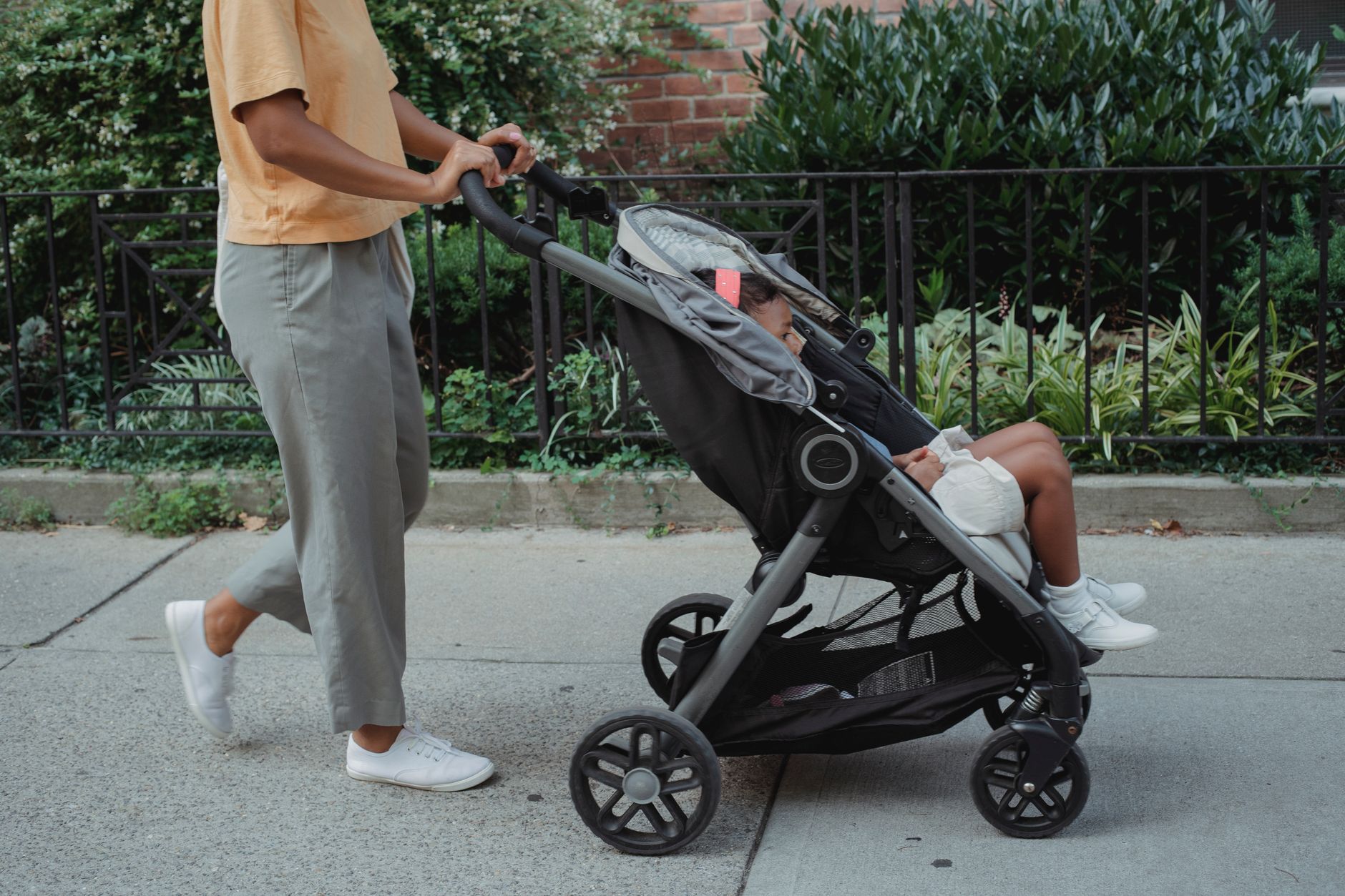
Best for rideshare compatibility: Compact travel strollers (Babyzen YOYO2, GB Pockit+, Joolz Aer). These fold to cabin baggage size, fit in virtually any trunk, and let you keep your kid contained through the entire airport-to-car transition. The YOYO2’s 2026 model now includes a car seat adapter that works with major brands—one less thing to carry.
Acceptable with prep: Mid-size strollers (UPPAbaby Cruz, Nuna TRIV). Fold dimensions matter more than brand. Measure your folded footprint and keep it in your phone’s notes app for driver messages.
Rideshare nightmare: Full-size jogging strollers (BOB Revolution, Thule Urban Glide). Even “XL” rides may struggle with these. Consider airport luggage carts ($6-8) to get you to rideshare pickup, then collapse the stroller completely.
New for 2026: several airports including DFW, ATL, and SEA now offer “family transition zones” near rideshare pickup with covered stroller breakdown areas and car seat installation benches. These aren’t widely advertised—ask at your airport’s information desk.
The Hidden Contenders: Beyond Uber and Lyft
The best rideshare for airport families stroller car seat needs might not be the big two at all. Three alternatives are gaining serious traction with parents in 2026:
Wingz has expanded to 35 airports and offers pre-scheduled rides with guaranteed vehicle types. Their “Family” tier lets you specify car seat requirements, stroller space, and even request drivers with child passenger safety certification. The trade-off: 15-20% higher base fares, but zero cancellation risk.
HopSkipDrive—originally designed for school transportation—piloted airport service in Denver, Phoenix, and Orlando this year. All drivers are fingerprinted, background-checked, and trained in car seat installation. Vehicles are minivans or SUVs by default. The catch: 48-hour advance booking required, and it’s currently limited to those three markets.
Alto continues its premium push with consistent SUV fleets and trained drivers who won’t flinch at installation requests. Their 2026 “Family” package includes complimentary waiting time (15 minutes at airports, up from the standard 5) and trunk space guarantees. Available in LA, Dallas, Miami, and Houston.
For international arrivals, Blacklane and GroundLink remain reliable for pre-booked family transfers with specified child seats. Expect $80-150 for major airport-to-downtown routes versus $35-60 for UberXL.
Booking Tactics That Actually Work in 2026
Even the right platform fails without smart execution. Here’s the parent-tested playbook:
Time your pickup request precisely. Don’t request while still at baggage claim—airport rideshare queues often route you to the nearest driver, not the right vehicle. Collect your gear, reach the designated pickup zone, then request. This 3-minute delay dramatically improves vehicle match quality.
Use the “special request” field aggressively. “Traveling with 2-year-old, convertible car seat, compact stroller folded 20x12x8” gets better results than “need car seat” or silence. Specificity signals you’re an experienced traveler, not a surprise nightmare.
Have a Plan B ready. Screenshot backup options before you land. If your UberXL driver cancels seeing your gear, you need Lyft XL, Wingz, or even airport taxi rates at your fingertips. The 2026 reality: cancellation rates for family rides at major airports run 8-12% during peak hours.
Consider the “stroller only” strategy for short trips. If you’re visiting family with a spare car seat waiting, a compact stroller plus UberX beats wrestling with installation in a rental or rideshare. The YOYO2 with travel bag fits in 95% of standard sedan trunks.
Verify airport pickup zones before you fly. LAX’s LAX-it lot, Orlando’s MCO redesign, and Boston’s new consolidated rideshare area all changed family logistics in 2025-2026. Wrong zone = extra walking with gear = meltdown.
Making the Right Choice for Your Family’s Airport Run
There’s no universal answer to the best rideshare for airport families stroller car seat challenge. A solo parent with a newborn flying into JFK needs something entirely different than a family of four landing in Orlando with a week’s worth of Disney gear.
The 2026 landscape is improving—slowly. Uber and Lyft’s family options are real but geographically limited and inconsistently executed. The smarter money for stress-free travel is increasingly on pre-booked services where you control the variables: Wingz, HopSkipDrive where available, or premium options like Alto.
Whatever you choose, the non-negotiables remain unchanged: know your gear’s dimensions, practice your car seat installation until it’s muscle memory, and never assume a driver will help. The parents who thrive in airport rideshare chaos aren’t lucky—they’re prepared.
Your next flight with kids will still involve spilled snacks and questionable naps. But with the right booking strategy, at least the curb-to-car transition won’t be the breaking point.