
Rideshare App Development Cost Breakdown 2026: What It Actually Takes to Compete With Uber and Lyft
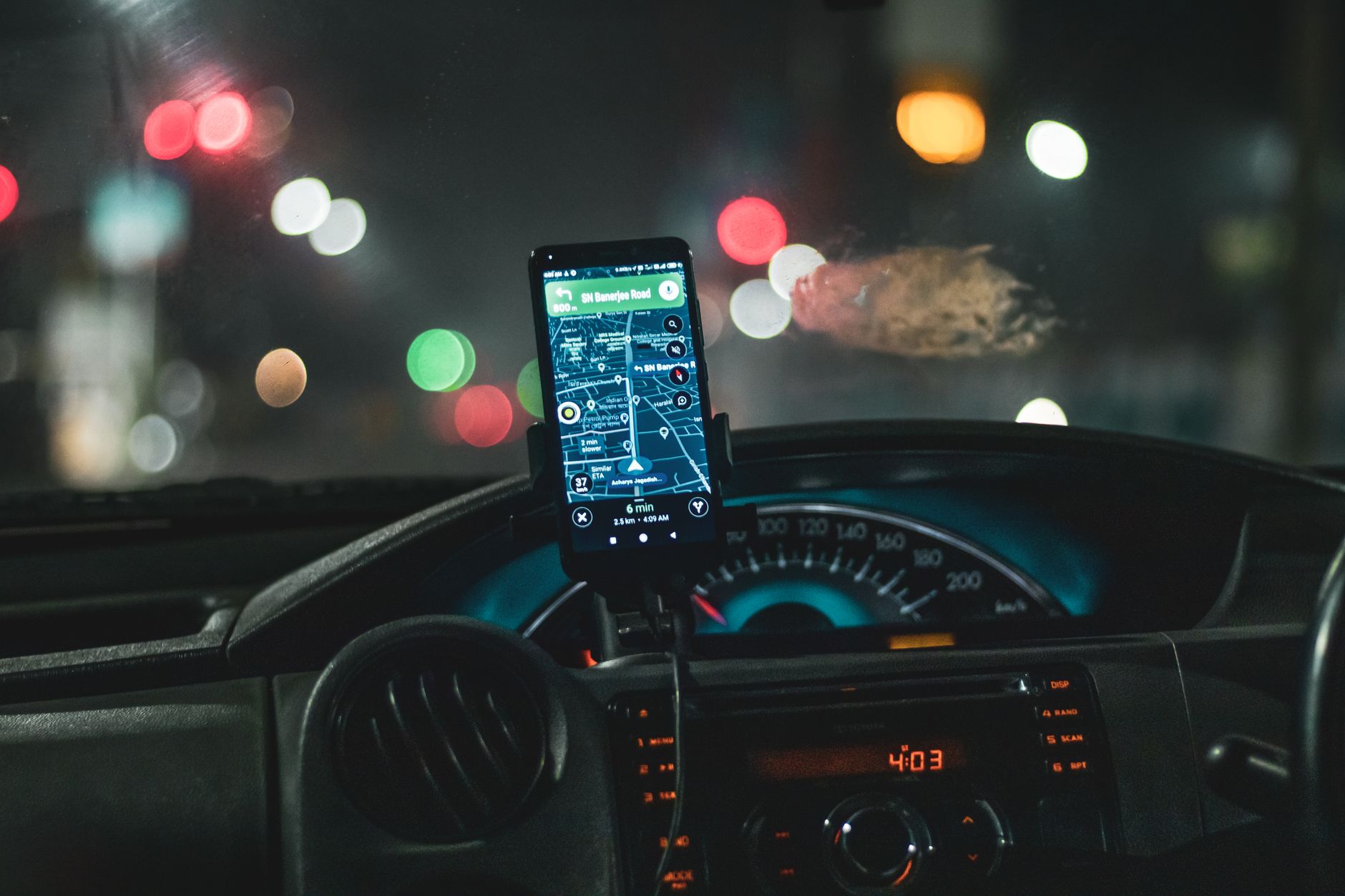
The rideshare industry just watched its most dramatic summer yet. In July 2026, Uber and Lyft posted record quarterly revenues while smaller players like Empower, Alto, and GoGet scrambled to hold market share in select cities. The headline on every investor’s desk? “Uber and Lyft Dominate the Ride-Share Industry. Can Rivals Cut In?” The honest answer: only if they understand the rideshare app development cost breakdown 2026 with surgical precision.
Building a viable competitor isn’t about copying Uber’s 2010 playbook. It’s about building leaner, smarter, and more specialized. Whether you’re a founder eyeing airport corridors, a fleet operator digitizing your taxis, or a regional player targeting underserved suburbs, this guide breaks down what you’ll actually spend—and where you can outmaneuver the giants.
The Reality Check: Why Most Rideshare Startups Burn Cash Early
Here’s what the headlines don’t tell you. Uber’s original app cost roughly $200,000 to build in 2009. Today, that same baseline functionality runs $80,000–$150,000 using modern frameworks—but that’s not where the money goes anymore.
The real cost centers have shifted:
- Real-time matching algorithms that handle surge, driver availability, and route optimization
- Regulatory compliance stacks for geofenced airport pickups, ADA requirements, and local licensing
- Payment infrastructure with instant driver payouts, fraud detection, and multi-currency support
- Safety layers including trip tracking, emergency buttons, and identity verification
A 2026 startup burning $500K on a flashy consumer app without backend resilience dies in month six. We’ve seen it in Boston, where new entrants underestimated the taxi pilot program integration costs. We’ve seen it in Orlando, where women’s rideshare apps struggled with driver verification scale.
Bottom line: your rideshare app development cost breakdown 2026 needs to separate “nice-to-have” from “survival-critical.”
Phase-by-Phase Breakdown: From MVP to Market-Ready
Phase 1: Core Platform (Months 1–6) — $75,000–$180,000
This is your foundation. Not fancy. Functional.
| Component | Cost Range | What It Covers |
|---|---|---|
| Passenger app (iOS/Android) | $25,000–$60,000 | Booking, tracking, payments, ratings |
| Driver app | $20,000–$50,000 | Accepting trips, navigation, earnings dashboard |
| Admin panel | $15,000–$40,000 | Fleet monitoring, dispute handling, analytics |
| Backend infrastructure | $15,000–$30,000 | APIs, databases, basic matching logic |
Pro tip: Use Flutter or React Native instead of native development. One codebase, both platforms. Startups using this approach in 2026 report 30–40% savings on initial build costs.
Skip custom animation. Skip social features. Your MVP needs one killer flow: request → match → ride → pay → review.
Phase 2: Operational Intelligence (Months 4–9) — $60,000–$140,000
This is where you separate from the “me too” apps that die quietly.
- Dynamic pricing engine: $20,000–$50,000. Not full surge—smart zone-based pricing that keeps drivers active without enraging passengers.
- Route optimization: $15,000–$35,000. Critical for airport runs where pickup zones are restricted and timing is everything.
- Predictive demand modeling: $25,000–$55,000. Anticipate Friday night bar crowds, Sunday airport rushes, weather events.
Empower’s driver-owned model works partly because their demand prediction keeps drivers earning consistently—not just during peaks. That’s worth the engineering investment.
Phase 3: Compliance & Safety Infrastructure (Months 6–12) — $50,000–$120,000
The hidden budget killer. Ignore it and regulators shut you down, or worse—insurance voids your coverage.
- Geofencing & airport integration: $15,000–$40,000. LAX, JFK, and 40+ major airports have specific pickup protocols. Your app must auto-direct to approved zones, display wait time estimates, and sync with airport authority systems where required.
- Background check APIs & ongoing monitoring: $10,000–$25,000. Continuous criminal record monitoring, not just point-in-time checks.
- Insurance verification & accident reporting: $15,000–$30,000. Real-time policy validation, automated incident logging.
- Accessibility compliance (ADA): $10,000–$25,000. Wheelchair-accessible vehicle integration, service animal protocols, screen-reader compatibility.
The Boston taxi pilot program that integrated rideshare booking showed how costly retroactive compliance can be. Build it in from month six.
Phase 4: Scale & Differentiation (Months 10–18) — $80,000–$250,000
Now you’re playing to win specific markets, not just exist.
- Subscription/membership engine: $20,000–$50,000. Monthly airport commuter plans, corporate account billing—this is where unit economics flip positive.
- Multi-modal integration: $30,000–$80,000. Partner with transit for first/last mile, or private driver services for premium tiers.
- AI customer service: $15,000–$40,000. Automated dispute resolution, lost item tracking, driver support triage.
- White-label capability: $15,000–$40,000. License your platform to hotel chains, airports, or smaller fleets.
Alto’s Los Angeles expansion succeeded because they targeted consistent airport commuters with premium vehicles and predictable pricing—built on this phase’s infrastructure.
The Annual Runway: What You’re Really Committing
Add it up conservatively:
| Year 1 | $265,000–$690,000 | | Year 2 (growth & refinement) | $200,000–$500,000 | | Year 3 (regional scale) | $300,000–$800,000 |
That’s $765,000–$1.99 million to reach sustainable regional operation. Against Uber’s $40B+ market cap and Lyft’s $6B+ infrastructure, you’re not outspending them. You’re out-focusing them.
Specific angles that work in 2026:
- Airport corridor specialization: Build the definitive LAX→downtown or JFK→Manhattan experience. Own one route completely.
- Driver-retention-first economics: Lower commission than Uber’s 25–30%. Empower and GoGet prove this attracts supply, which attracts demand.
- Zero-surge subscription models: Predictable pricing for predictable routes. Corporate travel managers love this.
Where to Cut Without Killing Your Product
Smart founders in 2026 are ruthless here:
- Use Stripe Connect or Hyperwallet for instant driver payouts instead of building custom payment rails. Saves $40,000+ and months of compliance work.
- License mapping from Mapbox or Google Maps Platform rather than building proprietary navigation. Your differentiator isn’t the map—it’s the matching logic on top.
- Start with third-party KYC providers (Onfido, Persona) for driver verification. Build internal systems only when volume justifies it.
- Delay AI chatbots. Human support for your first 10,000 trips teaches you what actually breaks. Automate later.
Conclusion: The Real Cost Is Opportunity
The rideshare app development cost breakdown 2026 isn’t just a spreadsheet exercise. It’s a strategic map. Uber and Lyft’s dominance means they’ve optimized for mass-market efficiency—they’re slow to adapt to niche demands, resistant to driver-friendly economics, and bureaucratic about local compliance.
Your advantage isn’t a bigger budget. It’s specificity. Build for airport commuters who hate surge pricing. Build for drivers who want ownership stakes. Build for cities where the duopoly’s service quality has slipped.
The $500,000–$2 million range is real, but so is the window. Every month that Uber and Lyft focus on autonomous vehicle partnerships and food delivery cross-sells, they leave gaps in human-driven, relationship-based transportation. That’s your entry point.
Calculate your phases honestly. Cut ruthlessly where it doesn’t matter. Spend deliberately where it wins drivers and riders. The next viable rideshare competitor won’t look like Uber—it’ll look like exactly what Uber stopped paying attention to.